
Back-to-School English Activity: Baseline Writing with Kate Chopin’s “The Story of an Hour”
Start the school year with a powerful baseline writing activity using Kate Chopin’s The Story of an Hour in your high school English class.

Start the school year with a powerful baseline writing activity using Kate Chopin’s The Story of an Hour in your high school English class.

The collaborative essay. In today’s era of the increasingly more prominent AI-generated student essay, teaching students how to write is more challenging than ever! And while AI will most certainly be an integral part of Gen-Z and Generation Alpha’s educational and professional careers, middle school and high school teachers across the globe are finding new ways to teach writing to ensure that students have the necessary skills for effective communication and critical thinking.
One way that I’ve adjusted my instruction because of AI is by focusing on more in-class writing either with paper and pencil or a lockdown browser. However, simply assigning writing is not enough to make sure our students are learning how to improve their writing skills –they also need a variety of practice activities to help them practice their writing. That is where the in-class collaborative essay comes in!
Recently, I assigned my students an in-class collaborative essay on paper. While I’ve facilitated collaborative paragraphs and essays before, I needed to adapt my instructional strategies this time to do my best to AI-proof the activity. In retrospect, this was a highly effective activity, and I feel my students did well and improved in their writing abilities.

If you are a middle school ELA or high school English teacher looking to improve your writing instruction and provide meaningful and effective instructional strategies
Teaching students how to write a multi-paragraph essay is a process, and it isn’t something that can be taught in one class period, nor is
Teaching argument writing can be very exciting, especially if you have great argument essay prompts for your students to choose from. It provides students with an opportunity to explore interesting topics. I give my students choices when I teach argument writing in my classroom. Students who select their topics are more engaged with and connected to their writing.
When it comes to teaching students how to write a research paper, there is one area where students struggle: writing a guiding research question. Oftentimes,
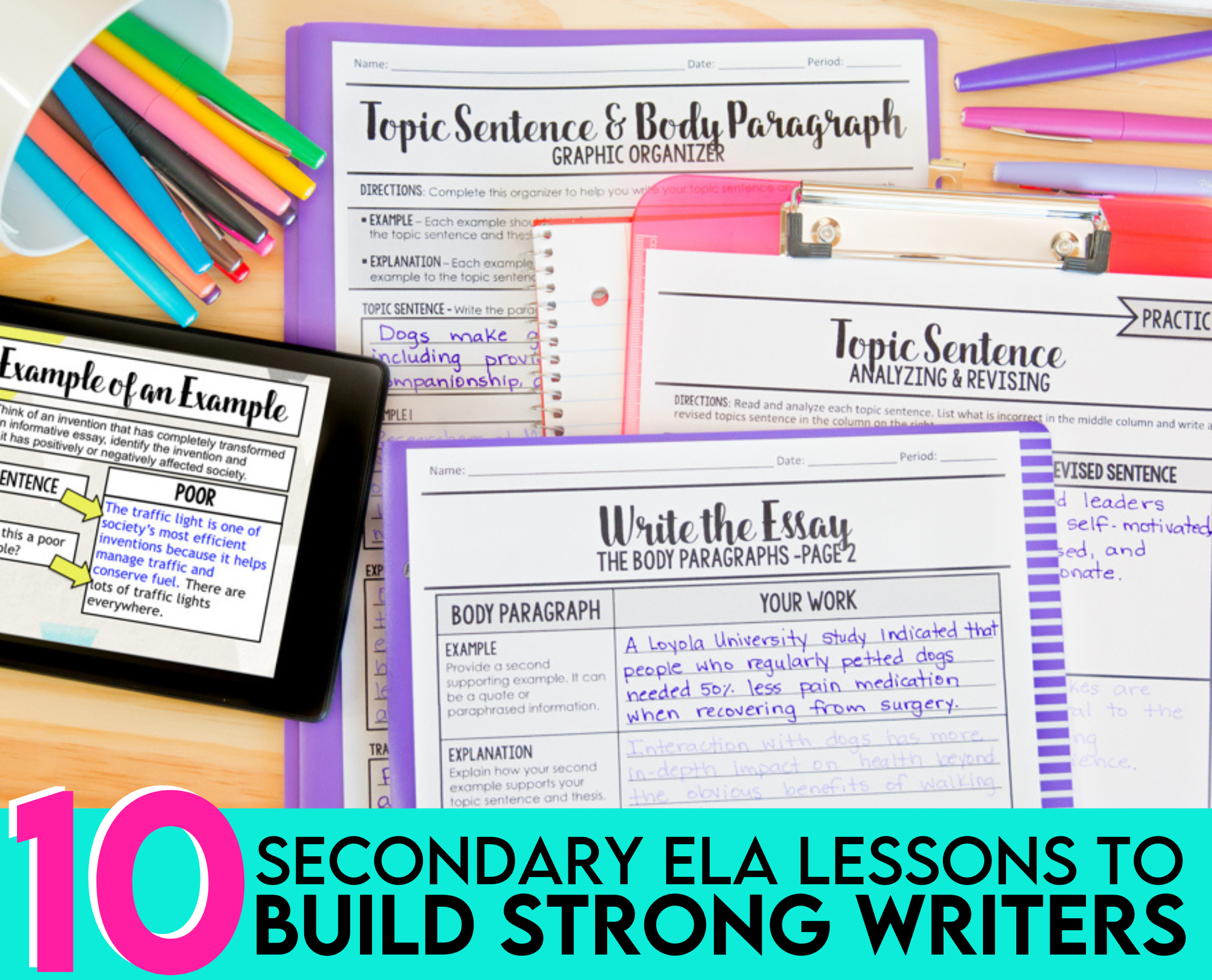
When it comes to teaching writing, there is just so much to teach. To help students become stronger writers, students need to be well-versed in sentence structure, grammar, and how to organize their ideas, just to name a few skills. One of the best ways to teach middle school ELA and high school English students to become stronger writers is by focusing on specific skills one at a time. This way, students are not overwhelmed, and teachers can more easily assess a certain writing skill. Here is a look at ten secondary ELA writing resources teachers can use to help build strong writers.
The age-old five-paragraph essay elicits many things from students: mostly, a creative variety of groans and eye-rolls. An exasperated student might inquire: “Haven’t we done this before, like, a million times? Why do we have to keep on doing this?”
While there are so many reasons for why we as teachers need to move our students beyond the five paragraph essay, it is also essential for writing instruction. Don’t let students catch you off guard. Here are five reasons why the five-paragraph essay is still a critical tool for students’ development as writers and thinkers.
Teaching students how to write argumentative papers can be a challenging task. From teaching students how to include and refute the counterclaim to ensure students find the most relevant evidence to support their claims, teachers have their work cut out for them. This blog post will go over exactly how to teach argument writing in the secondary ELA classroom.