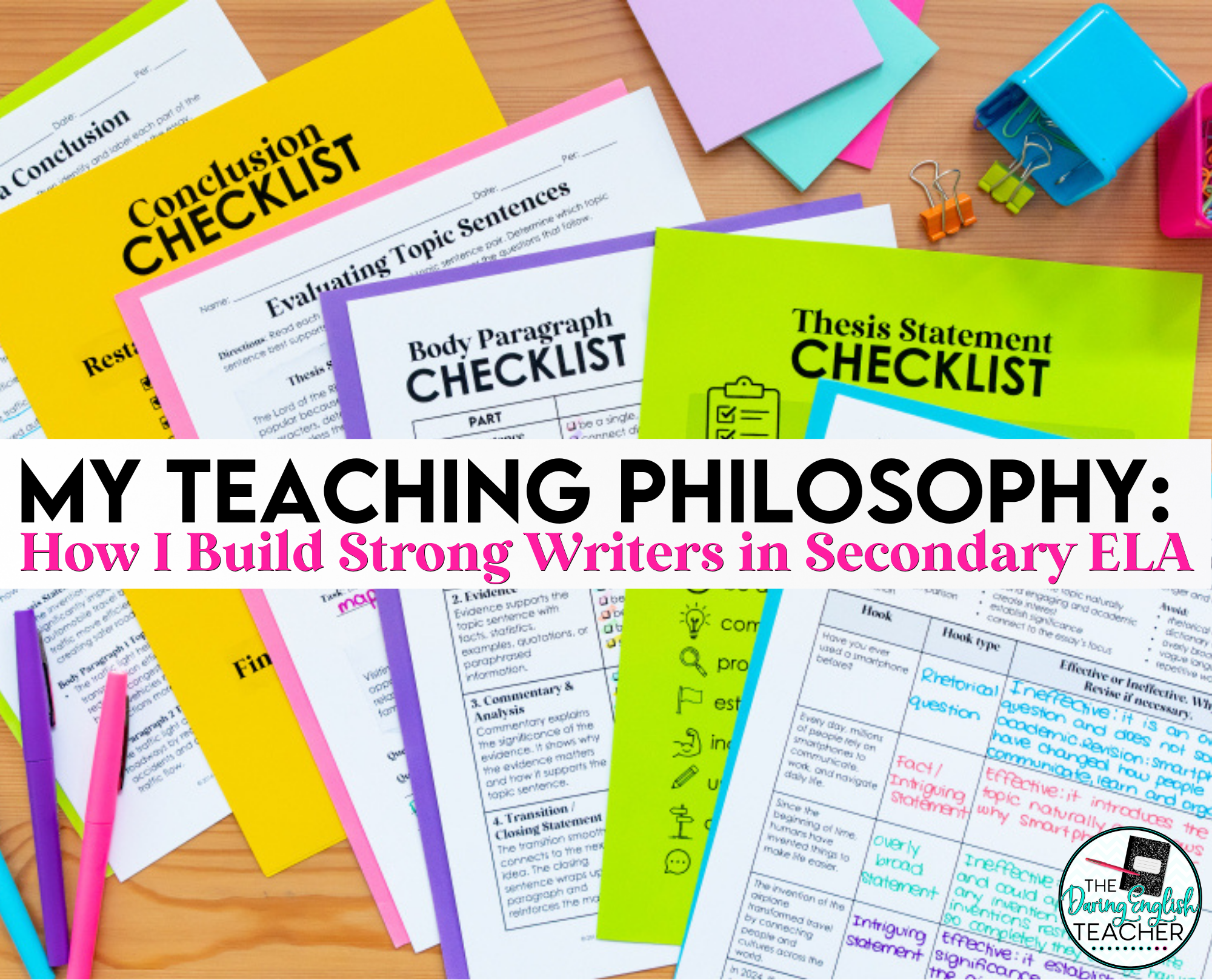
My Teaching Philosophy: How I Build Strong Writers in Secondary ELA
The instructional beliefs, classroom routines, and writing strategies that transformed the way I teach writing. I Didn’t Become a Better Writing Teacher by Finding a

The instructional beliefs, classroom routines, and writing strategies that transformed the way I teach writing. I Didn’t Become a Better Writing Teacher by Finding a
This post contains affiliate links. As an Amazon Associate, I earn from qualifying purchases at no additional cost to you. One of my favorite back-to-school

The final stretch before winter break is always a unique season in the ELA classroom. Students are buzzing with anticipation, schedules get interrupted by assemblies

Helping students build resilience, confidence, and self-awareness is just as important as teaching academic content. That’s why incorporating growth mindset and SEL activities and social-emotional

Start the school year with a powerful baseline writing activity using Kate Chopin’s The Story of an Hour in your high school English class.

As ELA teachers, we’re always looking for fresh ways to help students dive deeper into literature, especially with ways that go beyond the standard five-paragraph essay or chapter quiz. That’s exactly why I created my Theme Park Literary Analysis Project. This is a creative, engaging, and rigorous assessment that invites students to interact with literature in a totally new way.
This project has quickly become one of my favorite go-to final assessments for novels, plays, and even short stories. Whenever I finish a novel, I usually assign two major summative assessments: a standard novel test and a fun, collaborative project. Together, these two forms of assessment help me see what my students know. And this literary analysis amusement park project fits the bill for an engaging, collaborative, summative project!

We’ve all been there—the class period feels sluggish, students are zoning out, and your perfectly planned lesson just isn’t landing the way you hoped. Whether

At the start of a new school year (and quite frankly, all year long, too) one of my top priorities is building a strong, supportive

The collaborative essay. In today’s era of the increasingly more prominent AI-generated student essay, teaching students how to write is more challenging than ever! And while AI will most certainly be an integral part of Gen-Z and Generation Alpha’s educational and professional careers, middle school and high school teachers across the globe are finding new ways to teach writing to ensure that students have the necessary skills for effective communication and critical thinking.
One way that I’ve adjusted my instruction because of AI is by focusing on more in-class writing either with paper and pencil or a lockdown browser. However, simply assigning writing is not enough to make sure our students are learning how to improve their writing skills –they also need a variety of practice activities to help them practice their writing. That is where the in-class collaborative essay comes in!
Recently, I assigned my students an in-class collaborative essay on paper. While I’ve facilitated collaborative paragraphs and essays before, I needed to adapt my instructional strategies this time to do my best to AI-proof the activity. In retrospect, this was a highly effective activity, and I feel my students did well and improved in their writing abilities.