
The instructional beliefs, classroom routines, and writing strategies that transformed the way I teach writing.
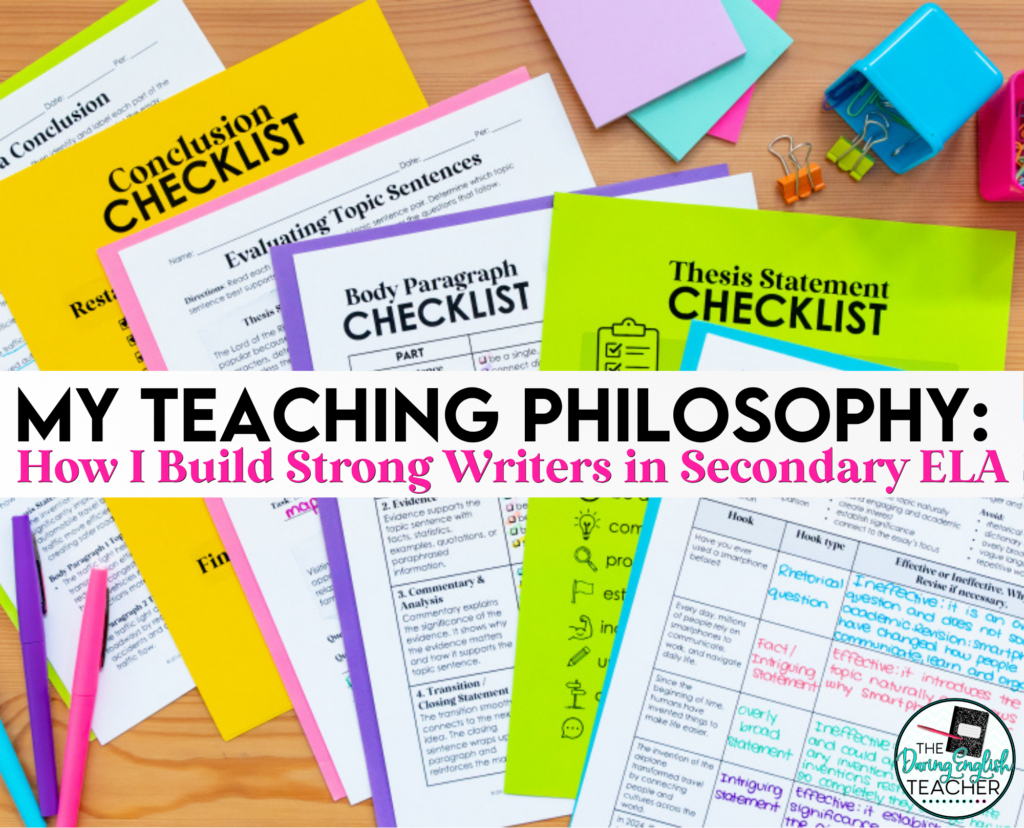
I Didn’t Become a Better Writing Teacher by Finding a Better Curriculum.
I became a better writing teacher by changing what I believed about teaching writing and by making the conscious shift from merely assigning writing to teaching writing.
When I first started teaching, some of my inspiration came from my own high school career. It wasn’t uncommon in the late 90s and early 2000s for teachers to assign an essay on a Monday, have it due on Friday, and never work on it at all in class. So, early in my teaching career, I thought teaching writing meant assigning an essay, copyediting the draft, and handing it back to students with a final grade on it.
However, I quickly learned that this wasn’t actually teaching writing. Over the years, my students have taught me a lot about teaching writing. Once I stopped simply assigning writing as an endpoint and started teaching it more intentionally with strategies and scaffolds, I saw so much growth. More importantly, though, I saw a boost in my students’ confidence.
Today, every writing lesson I teach, every classroom routine I implement, every YouTube video I create, every resource I design, and every page I wrote in Building Strong Writers is rooted in the same instructional beliefs. These principles have transformed the way I teach writing, and more importantly, they’ve helped my students become stronger, more confident writers.
Writing Is a Collection of Skills, Not One Assignment
Assigning essays doesn’t teach students to become stronger writers. Instead, breaking writing down and teaching specific skills one at a time teaches writing. Assigning writing is what actually assesses writing. When I teach writing, I start small and build up to my Essay Writing Unit.
Students become stronger writers when they develop one skill at a time. They become stronger writers when they have many opportunities to practice that skill, receive immediate feedback, and try again. That is why I never assign an entire essay in the first couple of months of a new school year. I start with a tried-and-true three-sentence response. In the video below, I break down exactly how I use this strategy with my students.
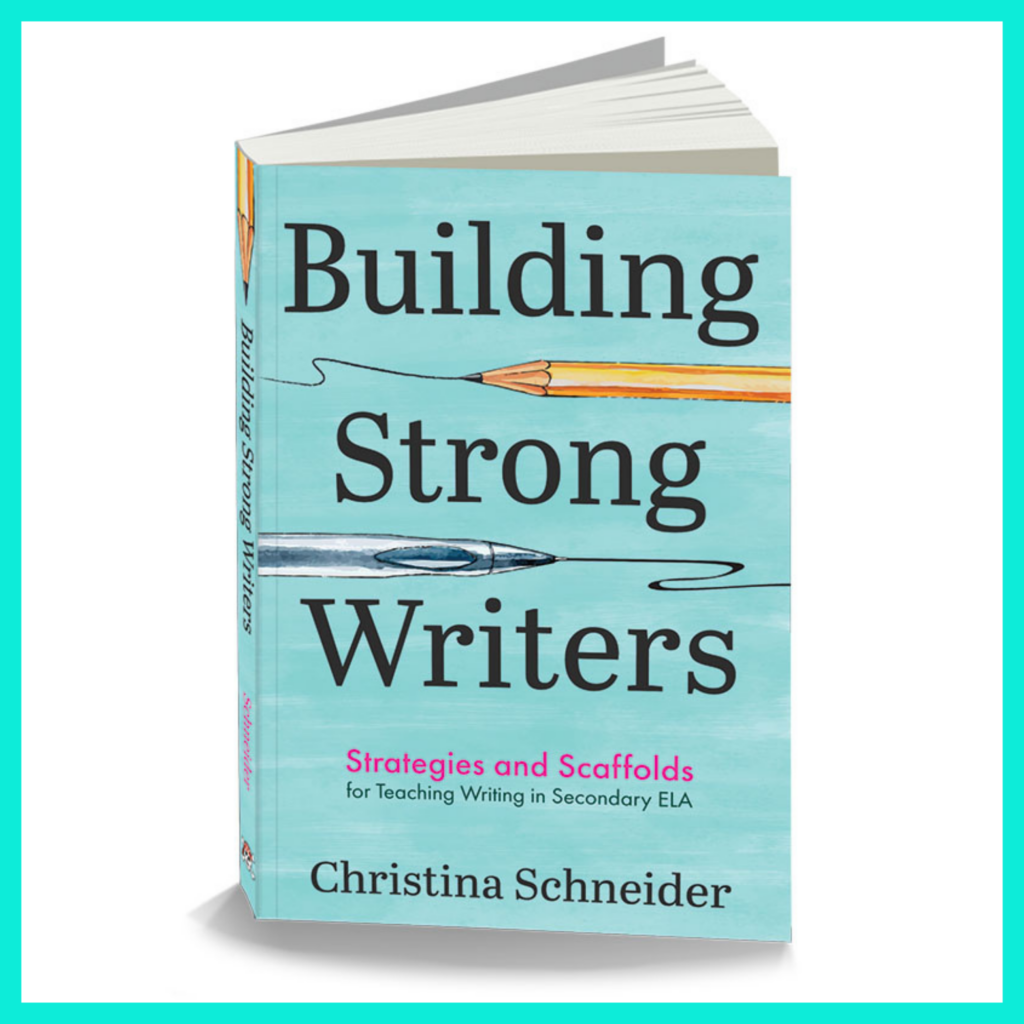
When it comes to teaching students specific writing skills that will help them become stronger writers, I use a variety of strategies and scaffolds. These strategies include color-coding, sentence frames, mentor texts, word boxes, sentence starters, and more. In my book Building Strong Writers: Strategies and Scaffolds for Teaching Writing in Secondary ELA, I share these strategies in great detail and provide teachers with actionable steps they can immediately take in their classrooms to become stronger writing teachers.
Confidence Comes Before Complexity
Once I stopped merely assigning writing and focused more on teaching writing, I realized that students don’t hate writing. They hate feeling like they are bad at it. They hate feeling like they’ve failed before they’ve even started. They hate feeling like they don’t know how to articulate the complex thoughts swirling around their heads.
Students hate feeling unsuccessful, and that is where a lot of the writing resistance comes from.
Before we can expect students to tackle multi-paragraph essays, we need to equip them with the skills necessary to write them. They need to know how to start the paragraph, how to introduce and embed a quote, how to explain the quote, and how to transition from one idea to the next. This is why the three-sentence writing strategy is so beneficial. Students can practice the essential skills with a small, manageable assignment that doesn’t feel like climbing Everest. They think to themselves, “It’s only three sentences. I’ve got this!”
Once students experience early success with smaller writing assignments, it gives the confidence boost they need, so they no longer feel that dread when they are faced with a writing task. Confidence isn’t something students magically develop over time. It’s built one successful writing experience at a time.
Strong Essays Begin with Strong Sentences
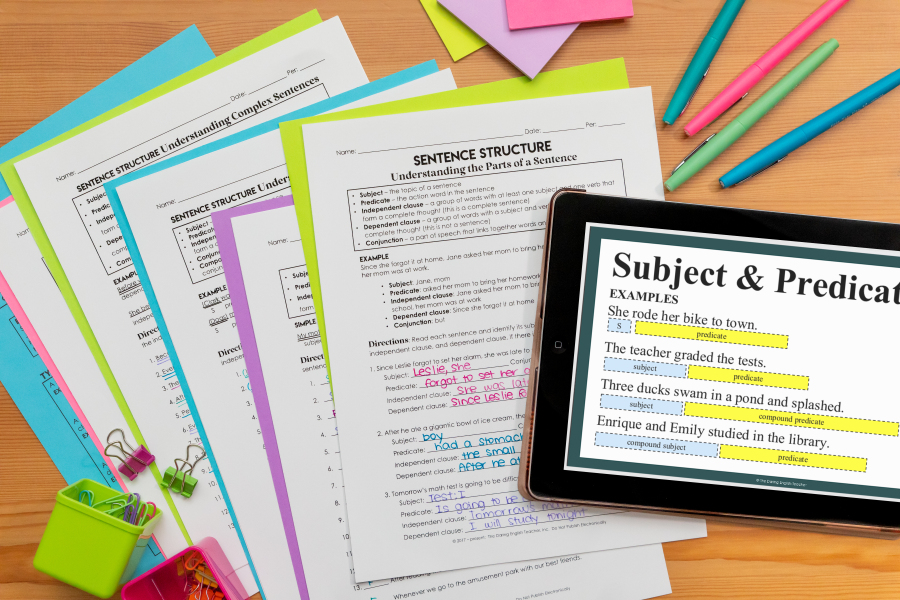
Before my students write their first multi-paragraph essay, I teach sentence structure. And yes, I even do this with sophomores in high school. Going back and teaching/reviewing essential skills like sentence structure, nouns, and verbs helps put all of the students on a level playing field.
It ensures that when they sit down to write, they will know that a complete thought requires a subject and a predicate. Teaching sentence structure early on in the year helps students improve their grammar when they write.
In my classroom, I use this Sentence Structure Teaching Unit. It includes a multi-day, ready-to-use instructional slide deck and plenty of student activities and practice sheets to help them master sentence structure. I even created a student-facing video about sentence structure that teaches the same content from my sentence structure unit.
Once students understand sentence structure, they can move on to syntax and sentence variety, which inevitably helps them become stronger writers.
To help my students actively practice syntax and sentence variety, I like to start my classroom several days a week with these Sentence Combining Bell Ringers. This warm-up activity is actually quite simple. However, it requires a lot of thinking on the students’ end. They read a series of related, simple sentences and must combine the information into a more complex sentence without changing the original meaning of the sentences. This daily writing practice helps students start thinking like writers, and the skill transfers to their essays later on.
I Teach the Writing Process, Not Just the Final Product
One of the biggest shifts I made as a writing teacher was realizing that I had been placing far too much emphasis on the final essay.
For years, my instruction revolved around the finished product. I would assign an essay, teach a few mini-lessons along the way, and then evaluate the final draft. If students struggled, I often found myself wondering why they hadn’t applied what we had learned.
Eventually, I realized the problem wasn’t my students. It was my instruction.
Strong writers aren’t created by assigning more essays. They’re created by explicitly teaching every stage of the writing process.
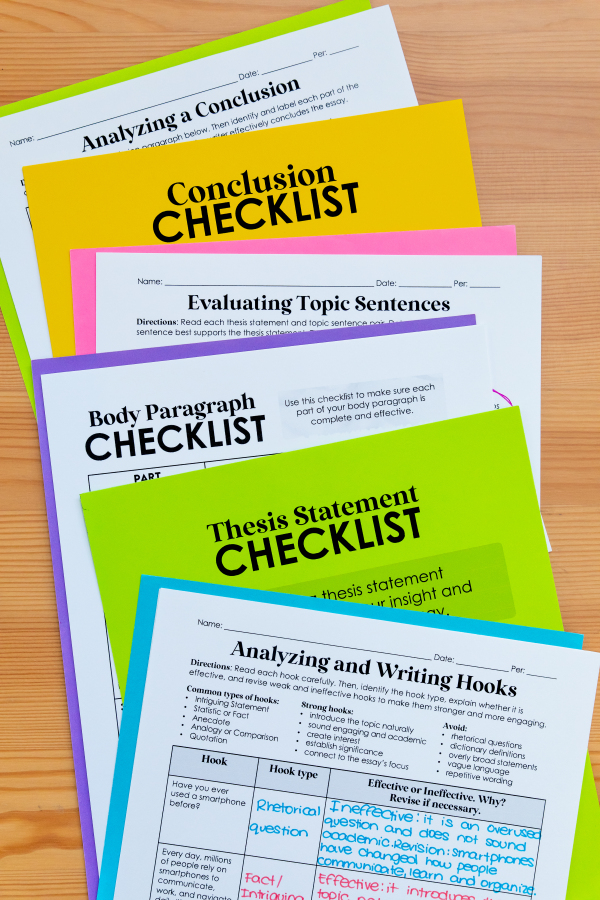
Today, I spend much more time teaching students how to think like writers than I do grading final drafts. We brainstorm ideas, analyze mentor texts, practice individual writing skills, create outlines, draft together, revise with purpose, and reflect on our progress. Every step is intentional because every step teaches students something new about writing. One of my favorite resources is the Guided Essay Outline, which helps students organize their thoughts every step of the way. When students understand why they’re completing each step, writing feels less overwhelming because they’re never expected to do everything at once.
This approach also changes the classroom dynamic. Instead of acting as the evaluator waiting for a final draft, I become a coach who guides students through the process. We conference together, solve problems together, and celebrate growth along the way.
By the time students submit a completed essay, they’ve already received multiple opportunities to practice, ask questions, revise, and improve. The final product isn’t where learning begins. It’s simply evidence of everything they’ve learned throughout the process.
Writing Should Happen in the Classroom
One of the questions I get asked most often is why my students complete nearly all of their major writing assignments in class.
The answer is simple. Writing is a skill that deserves instruction, guidance, and feedback while students are actively doing the work. Plus, keeping writing in the classroom allows me to see my students’ authentic thinking rather than wondering whether the work truly reflects what they know and can do.
When students write in class, I can see their thinking develop in real time. I can answer questions before frustration sets in. I can conference with students who need extra support and challenge those who are ready for more. Instead of wondering how students arrived at their final draft, I get to be part of the entire journey.
Teaching writing this way has become even more important as artificial intelligence continues to change education.
Rather than spending my time trying to determine whether a student used AI, I’d rather create classroom experiences where I can observe authentic writing from beginning to end. Students brainstorm, draft, revise, and reflect while I’m there to support them. The focus shifts from policing writing to teaching writing.
Writing in class also creates a more equitable learning environment. Every student has access to the same instruction, the same resources, and the same opportunity to ask questions. Success isn’t determined by what support students have at home. It’s built through consistent practice in the classroom.
For me, writing has become less about collecting essays and more about helping students realize that they already have ideas worth sharing and giving them the skills to communicate those ideas with confidence.
New to The Daring English Teacher Writing Philosophy? Start Here!
Teaching writing is one of the most rewarding and challenging parts of being an English teacher. It has also been one of the areas where my own teaching has evolved the most.
I certainly don’t have every answer, and I continue learning from my students every year. However, the biggest lesson they’ve taught me is that students become stronger writers when we intentionally teach the skills that writing requires instead of assuming they’ll develop those skills simply by writing more essays.
That belief continues to shape every lesson I teach, every classroom routine I refine, every resource I create, and every professional development opportunity I have the privilege of sharing with other educators.
If you’ve found your way here because of Instagram, YouTube, my book, or one of my classroom resources, I’m glad you’re here. I hope these ideas encourage you to continue growing as a writing teacher, just as my students have encouraged me throughout my own journey.
Here is a curated list of resources to help you on your teaching writing journey.
🎥 Three-Sentence Strategy YouTube Video: This is a must because in this video I break down exactly how to use the three-sentence strategy in your classroom.
📄 Guided Essay Outline: This essay outline will become the new staple in your classroom. It works with a variety of essay types, and you can use it over and over again throughout the school year.
📄 Essay Writing Unit: My Guided Essay Outline is included in this Unit. This teaching unit includes ready-to-go instructional slides for teaching the introduction, body paragraphs, and conclusion.
📚 Building Strong Writers: My book goes more in-depth about the strategies that I use in my classroom to help build my students into strong writers.